

Why Is There Never a 0 Result on a Herpes Test?
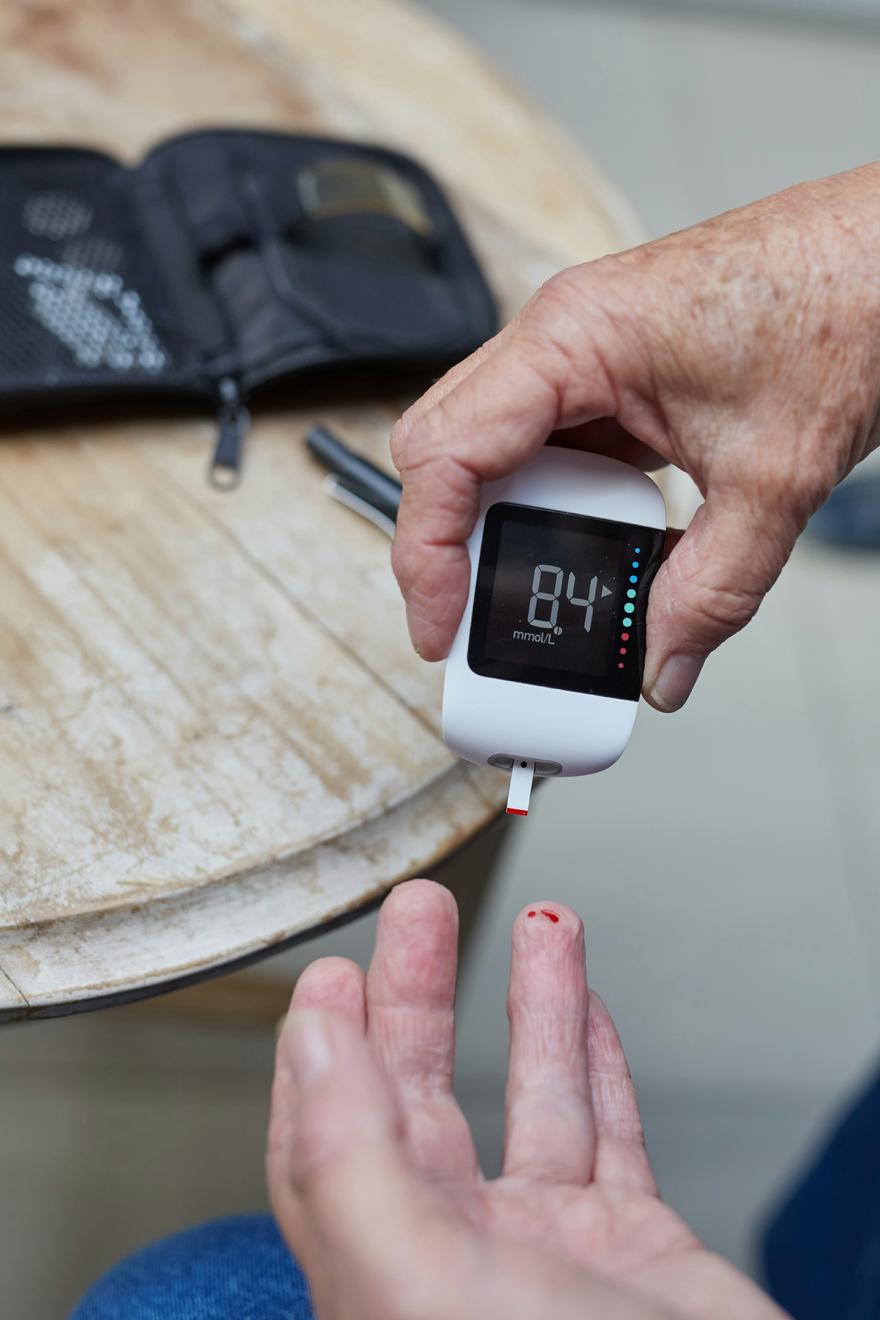
A number on your herpes test. But it's not 0.00. It's 0.4. Or 0.7. Or maybe 0.2.
And your brain immediately goes: Wait. I thought I was negative. Why isn't it zero? Does this mean I have some herpes in me? Is this a false negative?
Let's get the basics of testing.
How Herpes Blood Tests Actually Work
First, it helps to understand what the test is actually measuring. A herpes blood test doesn't look for the virus itself. It looks for antibodies—proteins your immune system produces when it's been exposed to the herpes simplex virus.
The test uses a technology called ELISA (enzyme-linked immunosorbent assay). It measures how strongly your blood sample reacts to the herpes antigen. That reaction produces a color change, and the intensity of that color is measured and converted into an index value.
That index value is what you see on your lab report. And it's never zero because the test is measuring a biological reaction, not counting viruses.
Think of it like this: the test isn't asking "is there herpes in this blood?" It's asking "how much does this blood react to herpes proteins?" And the answer is almost always some reaction, even in someone who has never been exposed to the virus.
The Reference Range: What's Actually "Negative"
Here's where it gets interesting. Different labs use slightly different cutoffs, but the general framework looks like this:
So if your result is 0.4, that's negative. If it's 0.7, that's still negative. If it's 0.89, that's negative. If you're truly negative and you get tested three different times, you'll likely get three different values in the negative range. One might be 0.3, another 0.6, another 0.8. All negative. None zero.
The key thing to understand is that the number itself doesn't matter as long as it's below the cutoff. The test is qualitative, not quantitative. LabCorp explicitly states: "The magnitude of the Index Value is not indicative of the amount of antibody present in the patient sample". A 0.4 doesn't mean "less negative" than a 0.2.
They're both just negative.
They're both just negative.
Why Is There Always Some Reaction?
So why doesn't the test just give you a nice, clean 0.00? A few reasons.
Your immune system is always active. Even without herpes, your body produces antibodies to all sorts of things. The test is measuring a reaction, and there's almost always some baseline level of reactivity in any blood sample.
Cross-reactivity with other viruses. This is a big one. The herpes simplex virus shares proteins with other viruses in the herpes family—including the virus that causes chickenpox and shingles (varicella zoster virus). Your immune system might have produced antibodies to chickenpox years ago, and those antibodies can sometimes trigger a weak reaction on a herpes test.
Test variability. No lab test is perfect. There's always some degree of variability in how the test is run, how the sample is handled, and how the machine reads the result. That's why you might get slightly different numbers on different days.
Low Positives
Here's where the number actually matters: the low positive range. All the numbers above 3.5 are positive. If your number is higher, it probably means your body was producing antibodies at the moment of testing, which probably meant the virus was active to some degree. If you never noticed an outbreak, your body did the job well: the antibodies worked.
If your index value falls between 1.1 and 3.5, that's considered a "low positive". And in that range, the test is notoriously unreliable. The most commonly used test, HerpeSelect, often is falsely positive at low index values.
One study reported an overall specificity of just 57.4% in that range. That means nearly half of low positive results could be wrong. The CDC acknowledges that false-positive results are much more common with herpes testing than with tests for other STIs.
If you get a low positive result, that doesn't mean you definitely have herpes. It means you need confirmatory testing—like the Western blot, considered the gold standard.
What About a Negative Result?
A negative result—anything below that 0.90 cutoff—most often means you have not been infected with HSV-1 or HSV-2. But there's a catch: if the infection occurred very recently (within a few weeks to 3 months), the test might still be negative because your body hasn't produced enough antibodies yet. This is called a false negative.
So even a negative result doesn't always mean you're in the clear if you had a recent exposure. But the number itself? That 0.4 or 0.7? That's just noise. It doesn't mean you're "a little bit positive." It just means your blood reacted a little bit to the test, which is completely normal.
If you get a herpes test result and it's not 0.00, don't panic. Don't spiral. Don't spend hours on Google trying to figure out what 0.4 means. It means you're negative. That's all.
The test is measuring a biological reaction, and biological reactions are never perfectly zero. The number is just a number. What matters is which side of the cutoff it falls on.
And if you ever get a result in that low positive range—between 1.1 and 3.5—don't assume the worst. Ask for confirmatory testing. Get the Western blot if you can.
If you want to get tested for herpes, you can get tested at your doctor's office, or, if you're in US, HerpAlert can help you to get tested. It's Telehealth company, specialized for herpes. So whatever herpes questions you have that you need a doctor for, they can help you.

0 comments
Leave a comment
Please log in or register to post a comment