

Herpes Statistics: How Common Is HSV in 2026?
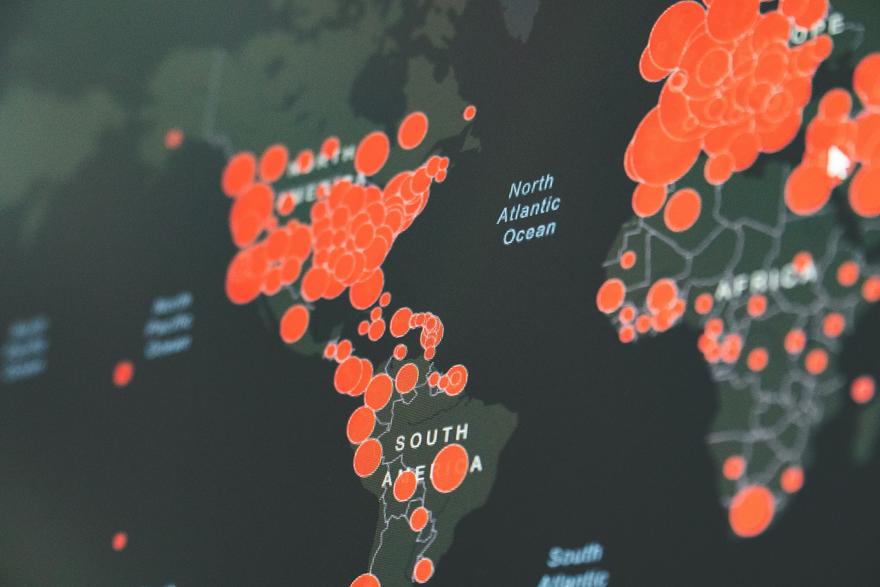
Herpes is one of the most widespread viral infections in the world, yet many people feel alone in their diagnosis. I want to show you today how many people have herpes.
An important note about the data: Although this article is being published in 2026, the latest WHO global estimates currently available describe infections in 2020. These estimates were published in 2025. They are the most recent comprehensive global estimates I found, not a count of infections occurring in 2026.
Global Herpes Statistics: The Big Picture
The World Health Organization (WHO) estimates that billions of people worldwide live with herpes simplex virus (HSV). There are two main types: HSV-1 and HSV-2.
HSV-1 is most commonly associated with oral herpes, including cold sores, but it can also cause genital herpes. HSV-2 is primarily associated with genital herpes.
Here are the key global figures from the WHO's latest fact sheet, published in May 2025.
- 3.8 billion people under age 50 were estimated to have HSV-1 in 2020, equivalent to approximately 64% of this age group.
- 520 million people aged 15–49 were estimated to have HSV-2, approximately 13% of the global population in that age group.
- 122 million new HSV-1 infections were estimated to occur in people aged 0–49 in 2020 (whether oral or genital, or elsewhere).
- 25.6 million new HSV-2 infections were estimated among people aged 15–49 in 2020.
- 16.8 million new genital HSV-1 infections were estimated among people aged 15–49 in 2020.
- 205 million people aged 15–49 experienced at least one symptomatic episode of genital herpes in 2020.
Sources: WHO, 2025; Harfouche et al., 2025.
These figures reveal the scale of herpes worldwide. They also highlight why it is important to distinguish between having the virus and experiencing symptoms. Many people with HSV never develop noticeable symptoms or do not recognize them as herpes.
The number of people living with the virus is therefore much higher than the number who know they have it.
Herpes Statistics in the United States
The United States has nationally representative data on HSV prevalence, although the most recent CDC figures I found for both HSV-1 and HSV-2 come from the 2015–2016 National Health and Nutrition Examination Survey (NHANES).
According to the CDC's National Center for Health Statistics, among Americans aged 14–49:
- 47.8% had HSV-1.
- 11.9% had HSV-2.
The study also found that HSV prevalence increased with age. For HSV-2, the age-adjusted prevalence was higher among women than men: 15.9% compared with 8.2%.
The researchers found that HSV-2 prevalence had decreased from 18.0% in 1999–2000 to 12.1% in 2015–2016, using age-adjusted estimates. HSV-1 prevalence also declined during that period.
These figures are useful, but they should not be described as current 2026 prevalence rates. They reflect the survey period and the population studied.
How many Americans get herpes each year?
There is no equivalent, comprehensive annual national count of new HSV infections in the United States. Herpes is not routinely reported through the same national case-surveillance system used for infections such as chlamydia, gonorrhea, and syphilis.
This means we should be cautious about websites claiming to give an exact number of Americans who acquire herpes every year without explaining how that number was calculated.
What we can say confidently: HSV affects a substantial proportion of the US population, and many people who carry the virus do not know their status.
Source: CDC, National Center for Health Statistics, NCHS Data Brief No. 304.
Herpes Statistics in North and South America
A 2021 systematic review and meta-analysis examined 102 relevant reports and estimated HSV-2 antibody prevalence across Latin America and the Caribbean.
These are pooled estimates from studies conducted across different years, not a count of infections in one specific year. The researchers also found substantial variation between studies and countries, so the regional average should not be assumed to apply equally to every South American country.
Herpes Statistics in Europe
Herpes is also widespread throughout Europe. However, European countries differ in their populations, testing practices, study methods, and the years in which samples were collected. There is no single annual case count that captures every HSV infection across the continent.
A 2020 systematic review and meta-analysis of HSV-1 in Europe found that the pooled prevalence of HSV-1 antibodies was 67.4%.
The review reported differences by age:
- Approximately 32.5% of children included in the analysis had HSV-1 antibodies.
- Approximately 74.4% of adults had HSV-1 antibodies.
- Among people older than 50, pooled prevalence was approximately 82.9%.
These are pooled estimates from studies included in the review, not a fresh survey of every European country. They also describe HSV-1 antibodies, which indicate previous infection but do not reveal whether the infection is oral or genital.
The review highlighted another important trend: HSV-1 is increasingly recognized as a cause of genital herpes. Historically, HSV-1 was mainly associated with oral infections acquired during childhood. But when people reach adulthood without having acquired HSV-1, they may be susceptible to genital infection through oral-genital contact.
This is one reason why genital herpes should not automatically be equated with HSV-2.
Source: Herpes simplex virus type 1 in Europe: systematic review, meta-analyses and meta-regressions, BMJ Global Health, 2020.
Herpes Statistics in Africa
The WHO's regional analysis identified Africa as one of the regions with the highest herpes burden.
In the 2020 estimates:
- Africa had the highest HSV-2 prevalence among the WHO regions.
- Nearly 10 million new HSV-2 infections occurred among females and males combined in the African region, accounting for approximately 38.3% of new HSV-2 infections worldwide.
- Africa also had the highest estimated prevalence of HSV-1, with many infections acquired orally during childhood.
However, regional estimates do not mean that every African country has the same prevalence. The WHO analysis used available population data and mathematical modelling, and the quantity and quality of data varied between regions. The researchers noted that high-quality, representative data remain limited in some settings.
It is also important to understand that a high prevalence does not mean people in a region are somehow responsible for their infections. HSV transmission is influenced by many factors, including how common the virus already is in the population, age at acquisition, and access to sexual health information and services.
Source: Harfouche et al., Sexually Transmitted Infections, 2025.
Herpes Statistics in Asia
A systematic review published in The Lancet Regional Health – Western Pacific in 2021 pooled results from studies across Asia. It estimated HSV-2 antibody prevalence in the general population as follows.
These are pooled estimates from multiple studies, not current annual infection rates. The studies covered different years and populations, and some country estimates vary substantially between studies.
2. HSV-1 prevalence in Asia
A separate systematic review, published in Clinical Infectious Diseases in 2019, examined HSV-1 prevalence in Asia. It found:
- 76.5% of adults had HSV-1 antibodies across the studies included in the review.
- 50.0% of children had HSV-1 antibodies.
- In China, the pooled estimates were 93.1% among adults and 61.3% among children.
Why Aren't There Exact Annual Herpes Statistics for Every Country?
One of the biggest challenges in understanding herpes is that many people never receive a diagnosis.
HSV can be transmitted even when a person has no visible sores or other symptoms. Some people have mild symptoms that they mistake for irritation, ingrown hairs, or another skin condition. Others never experience recognizable symptoms at all.
In addition, countries do not all collect herpes data in the same way. Some rely on population surveys and antibody testing, while others have limited national surveillance data.
Researchers therefore use a combination of available studies and mathematical modelling to estimate how many people have HSV and how many new infections occur each year.
Prevalence vs. incidence: What's the difference?
Prevalence refers to the number or proportion of people who are living with an infection at a particular time or during a defined period.
Incidence refers to new infections occurring during a particular period, such as one year.
For example, the estimate that 520 million people aged 15–49 lived with HSV-2 in 2020 describes prevalence. The estimate that 25.6 million people in the same age group acquired HSV-2 in 2020 describes incidence.
These figures answer different questions and should not be used interchangeably.
What Do These Herpes Statistics Mean for People Living With HSV?
The numbers show that herpes is common, but statistics alone cannot capture the emotional experience of receiving a diagnosis.
Another thing to notice is that different cultures view herpes in different ways. From our experience, we assume herpes carries the most stigma in US and some Asian countries. That doesn't mean we don't get messages from other parts of the world, but it does seem the stigma in some of these countries is not as strong as elsewhere.
We hope that this article brings you some peace in a weird or different way. Herpes is common, and probably more than you have ever imaged.
Many people still feel they must keep their diagnosis a secret because they fear judgment. Accurate education can help change that. When we understand how common HSV is, how it is transmitted, and how it can be managed, it becomes easier to approach the subject with empathy rather than shame.
The more we talk openly and accurately about herpes, the less power stigma has.
Ready to talk about herpes with other people who have it? Join our weekly calls on Mondays.
https://pmc.ncbi.nlm.nih.gov/articles/PMC8543241/?utm_ for Caribbean and South America

0 comments
Leave a comment
Please log in or register to post a comment